Konstfest 2026
19 February—22 February 2026
Lectures and talks
Celebrate and discuss art at Kin
The program begins at 15:00 on Thursday, 19 February, with exhibition openings and discussions.
Kin’s third Konstfest takes place 19–22 February 2026. Over four days, artists, architects, curators, researchers, activists, and other engaged participants from near and far gather together with museum visitors to celebrate and discuss contemporary art. The program includes everything from lectures on feminist perspectives on the political Picasso and Johan Turi’s stories about Sámi life at the turn of the last century, to conversations about how contemporary art can approach Borg Mesch’s photographs from the early decades of the 20th century. The role of contemporary art in an updated form of popular education, and what happens to the inhabitants of a town that disappears as the mine expands, will also be topics of discussion. There will also be guided tours in old and new Kiruna and an excursion. Everything relates to Kin’s activities during 2026 and beyond.
In addition, a new collection presentation opens, along with an exhibition by Bernd Krauss, where playfulness and art’s ability to sharpen our gaze toward the world are central. A video artwork tracing how our bodies become lucrative data without our consent will be shown, and participants in Kin’s multi-year project The Good Food will offer a meal where art, food, and the environment meet. The day will also highlight traces from the 20th anniversary of the Night Festival in Korpilombolo and plans for the upcoming Råneå Biennial.
Among the invited guests are artists Britta Marakatt-Labba, Dora García, Åsa Sonjasdotter, Karin Keisu, and Josse Thuresson; Sámi literature professor and aesthetic theorist Harald Gaski; author and researcher Stefan Jonsson; Kiruna-based photographer Hans-Olof Utsi; cultural figure Victoria Harnesk; art center director Theodor Ringborg; and historian and cultural scholar Alexander Etkind.
Konstfesten 2026 is arranged in collaboration with, among others, the Public Art Agency Sweden, the National Museums of World Culture, REMESO/Linköping University, and HDK-Valand Academy of Art and Design. The Konstfesten’s lectures, conversations, etc. will be held in English.
Thursday 19 February
15:00 Maria Lind, director of Kin, welcomes guests and opens Tenskasven (IKEApayback): Bernd Krauss in Full Figure.
Art Workshop, floors 1 and 3.
In a “repro-spective,” artist Bernd Krauss reviews thirty years of artistic practice, twenty of which were in Sweden. The focus is partly on home interiors: How does one create a room and living space for and with one’s practice? How are life and artistic creation affected by stability? And perhaps most importantly: how can the connection between art, function, and living become an invitation for the audience to sit down and experience art as something meaningful that concerns them?
15:30 Viewing of the new collection presentation featuring Sámi artists.
Floor 4.
Kin’s collection consists of just over 200 works reflecting the museum’s activities since it opened in 2018. This presentation features works by Sámi artists Britta Marakatt-Labba, Anders Sunna, Inga-Wiktoria Påve, Katarina Spik Skum, Hans Ragnar Mathiesen, and Katarina Pirak Sikku. It also includes three works by the legendary Johan Turi (1854–1936), on loan from the Municipality of Kiruna. The drawings offer a preview of Kin’s autumn exhibition On the Ugly and the Beautiful – Johan Turi, Outi Pieski, and Johanna Minde.
16:00 – Art, the Collective, and the Algorithms – Paths Toward Public Education and Democracy Lecture by Stefan Jonsson, author, researcher, and critic. Respondent: Paulina Sokolow, communications officer at Kin.
Floor 5.
Free culture and free expression — indeed, imagination itself — are threatened both by authoritarian nationalism and by commercialism that, through digital platforms, intrudes on our senses around the clock. What kinds of art and culture — and what kinds of public education — can liberate us from today’s digital and authoritarian oppression? How can we act collectively in a reality where we are constantly connected, logged in, located, controlled, downloaded, identified, and surveilled? Can we return to the foundations of public education and cultural policy to find tools and forms of collaboration that support a good, free, and equal society?
17:00 – Porous Bodies, film by Anna Ådahl, 18 min Introduction by Anna Ådahl.
Floor 5.
Porous Bodies (2025) is an essay film where old and new footage meet in an assemblage form. The film explores how our bodies become data and highlights the concept of “porous bodies.” Optical and infrared scanning methods penetrate the skin, registering bodily matter, iris patterns, and the veins in our hands. They record our identity from a distance, without permission, by analyzing video footage that reveals each individual’s unique body structure and movement patterns.
17:30 – Borg Mesch Photography Studio – On an Anniversary and Treasures from the Archive Presentation by Niclas Östlind, professor of photography at HDK-Valand.
Floor 5.
When Kiruna celebrated its 50th anniversary in 1950, Borg Mesch Photography Studio presented an exhibition of nearly 350 images from Borg Mesch’s (1869–1956) extensive production. Entrepreneurial in spirit, the exhibition was also a manifestation of both the photographer and the studio, telling the story of the profession and Mesch’s many roles in the local community. Kiruna’s city archive contains images and documents that deepen our understanding of Mesch’s work and how his photographs have been used and exhibited to shape both the history of photography and the history of Kiruna.
Photographer Hans-Olof Utsi and artists Mikhail Tolmachev and Norrakollektivet discuss their ongoing projects within Kin’s multi-year initiative Borg Mesch: A Photography Sápmi During the Colonial Period, a collaboration with Kiruna Municipality’s Department of Culture and Education.
18:15 Break
18:30 – A Hole in the Real: Dora García, Pablo Picasso, and a Mining Anniversary Guided tour of the ongoing exhibition with artist Dora García and Maria Lind.
Floor 2.
19:00 – Almost Picasso Presentation by Theodor Ringborg, director of Konsthall Tornedalen.
Floor 2.
In 1961, a 33.5-meter-high Picasso sculpture was planned for Kiruna. It was never realized, and when Konsthall Tornedalen investigated, they discovered that the model was at the University of South Florida. Together with the university, they made a 3D scan to create an AR version, allowing anyone with a mobile phone to place their own “almost-Picasso sculpture” anywhere. But where did the idea for a Picasso sculpture in Kiruna come from? How did the model end up in Florida? And can an unrealized sculpture be democratized through digital technology?
19:30 – Above and Below Ground – What Is Really Happening in Kiruna?
Floor 2.
Conversation about the city transformation and LKAB’s announcement in August 2025 that an additional 30% of old Kiruna will be demolished within 10 years. Participants include LKAB-employee and writer Jari Söyrinki, artists Britta Marakatt-Labba, Fredrik Prost and Dora García. Moderator: Emma Pettersson Juntti, producer and mediator at Kin.
Friday 20 February
9:30 Walk in old Kiruna with Tova Ejeklint, coordinator at Kin, and cultural figure Kajsa Westergren.
Meeting point: sports hall lobby.
12:00 Lunch at Det Café, Kiruna City Hall.
Please send an email to alice.lampa@kinmuseum.se. if you want to participate. The cost is 150 sek for a shrimp bowl or a vegetarian bowl, this meal needs to be pre-ordered.
12:45 Introduction to Gold and Green Forests with artist Jonas Nobel. City Hall lobby.
13:15 – Crossroads
Floor 5.
Conversation with Lena Stammarnäs, exhibition producer at the National Museums of World Culture in Gothenburg, and artist and joiker Astrid Tuorda.
On the collaborative work of describing the colonization of Sápmi in the exhibition Crossroads at the Museum of World Culture. The exhibition tells a story of encounters, power, and resistance, and of the joik as an act of resistance. The conversation addresses challenges and choices, self-representation and group representation, and the museum’s role as a state authority with Sámi collections and its colonial connections.
Moderator: Bettina Pehrsson, deputy director of Kin.
14:00 – The Natural History of Evil: The Political Role of Raw Materials from the Stone Age to AI
Floor 5.
Lecture by historian Alexander Etkind, based at Central European University in Vienna and head of the Hub for Politics of the Anthropocene. Respondent: Yana Tannagasheva, Indigenous activist. Moderator: Maria Lind.
This lecture features unusual protagonists: peat and hemp, sugar and salt, iron ore and oil. Raw materials belong both to nature and the economy — they drive culture. Modern life depends on them, yet they also generate inequality, oppression, and war. Etkind summarizes arguments from his recent books Nature’s Evil and Russia Against Modernity, using case studies from both “deep” history and the present. He argues that today’s economies should focus on productive labor and human creativity rather than parasitic extraction of natural resources.
15:15 – The Sleeper: On the Night Festival 2025
Floor 5.
Conversation with Edi Muka, curator at the Public Art Agency Sweden; artists Karin Keisu and Josse Thuresson; and Lena Ylipää, based on the 21st edition of the Night Festival held in Korpilombolo in December 2025.
The Public Art Agency, in collaboration with Kin, participated with the exhibition The Sleeper, featuring the above artists as well as Anila Rubiku. The exhibition reversed perspectives from Selma Lagerlöf’s The Wonderful Adventures of Nils, where Nils falls asleep precisely over Tornedalen. The program also included conversations, presentations, and co-creative workshops, all focusing on dreams, darkness, Tornedalian culture, and Meänkieli as a language.
16:00 – Wolf Hunting, Art, and Aesthetics: On Johan Turi
Floor 5.
Lecture by Harald Gaski, Sámi literary scholar, professor, and author based in Deatnu/Tana. Moderator: Maria Lind.
In this lecture on Johan Turi (1854–1956), Harald Gaski invites new ways of interpreting and valuing Turi’s art through Sámi and Indigenous aesthetic frameworks. Turi was the first Sámi multi-artist; his book Muitalus sámiid birra (An Account of the Sámi) was published in 1910 in Northern Sámi and Danish, containing vivid descriptions of reindeer herding, hunting, trapping, belief, healing, childbirth, and joik, along with Turi’s own drawings. Recently he has been called an Indigenous philosopher, documentarian, and inspiration for Sámi cultural revitalization. Today he is one of the most cited Sámi authors. As an artist, he has only in the last decade received recognition, despite having exhibited in Copenhagen as early as 1928.
17:30 – Råneå Art Hall, the Råneå Biennial, and Havremagasinet – Three Nodes in the Contemporary Art Network of Norrbotten
Floor 5.
Since 2018, the Råneå Biennial has been run by local forces in the small community north of Luleå, where parts of it take place in a former bank building now known as Råneå Art Hall. Artists Linn Lindström and Isak Anshelm talk about the Råneå Cultural Association and the art hall they run. Curators Ana Victoria Bruno, Sixten Liu, Kerstin Möller, Foteini Salvaridi, and Anastasia Shestak offer insight into the work on the next Råneå Biennial, opening 29 August 2026. Havremagasinet’s director Mariangela Mendez Prencke shares the county art hall’s work with both international contemporary art and culturally rooted projects in Boden.
19:00 – Love and Trade – A Situated Meal at Samegården
Artists and researchers in Kin’s multi-year project on art, food, and the environment, The Benevolent Food, have created this meal in response to two historical factors that have significantly influenced food traditions and other forms of exchange in the region: love and trade. Brytaregatan 14, old Kiruna.
The evening will also include an introduction to Samegården and the Sámi Museum located in its basement, presented by Siv Labba from the Kiruna Sámi Association, which runs the museum. All guests are welcome to bring a dish from their home region to contribute to the buffet, which will be based on freshly baked gáhkku (bread).
19:00 Welcome with warm Sámi biđus soup (potatoe, reindeer meat, etc.) and Indonesian soto soup (vegetarian).
19:30 Siv Labba takes participants on a journey through the house, ending in the large kitchen, where people gather around the baking of gáhkku and share the dishes they have brought for the buffet.
20:15 Victoria Harnesk and Maria Lind invite everyone to share both the food on the buffet and their stories. Additional stories by Åsa Sonjasdotter, Kultivator, and Sergio Montero Bravo.
A sweet surprise will be served to conclude the evening.
Please email alice.lampa@kinmuseum.se if you want to participate. The cost is 200 sek, which can be paid on site.
Saturday 21 February
9:30 Day excursion in the country with reindeer herder and journalist Anna-Karin Niia. Departure from Malmfältens folkhögskola, Campingvägen 3, old Kiruna.
Please email alice.lampa@kinmuseum.se if you want to participate.
17:00 Return to Kiruna.
Sunday 22 February
10:00–16:00 Kin is open.
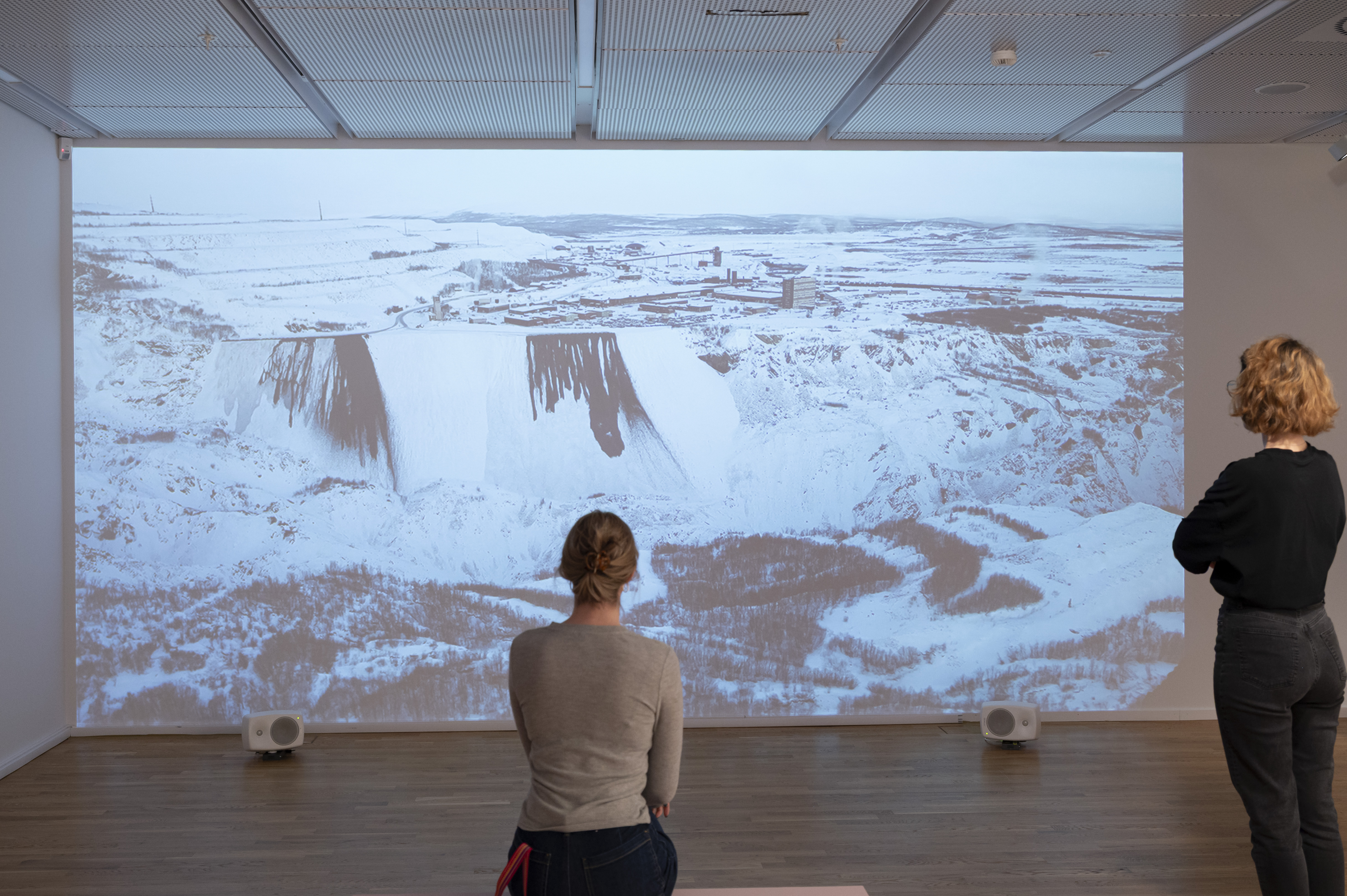
Image 1: Still from Landscape, Dora García.
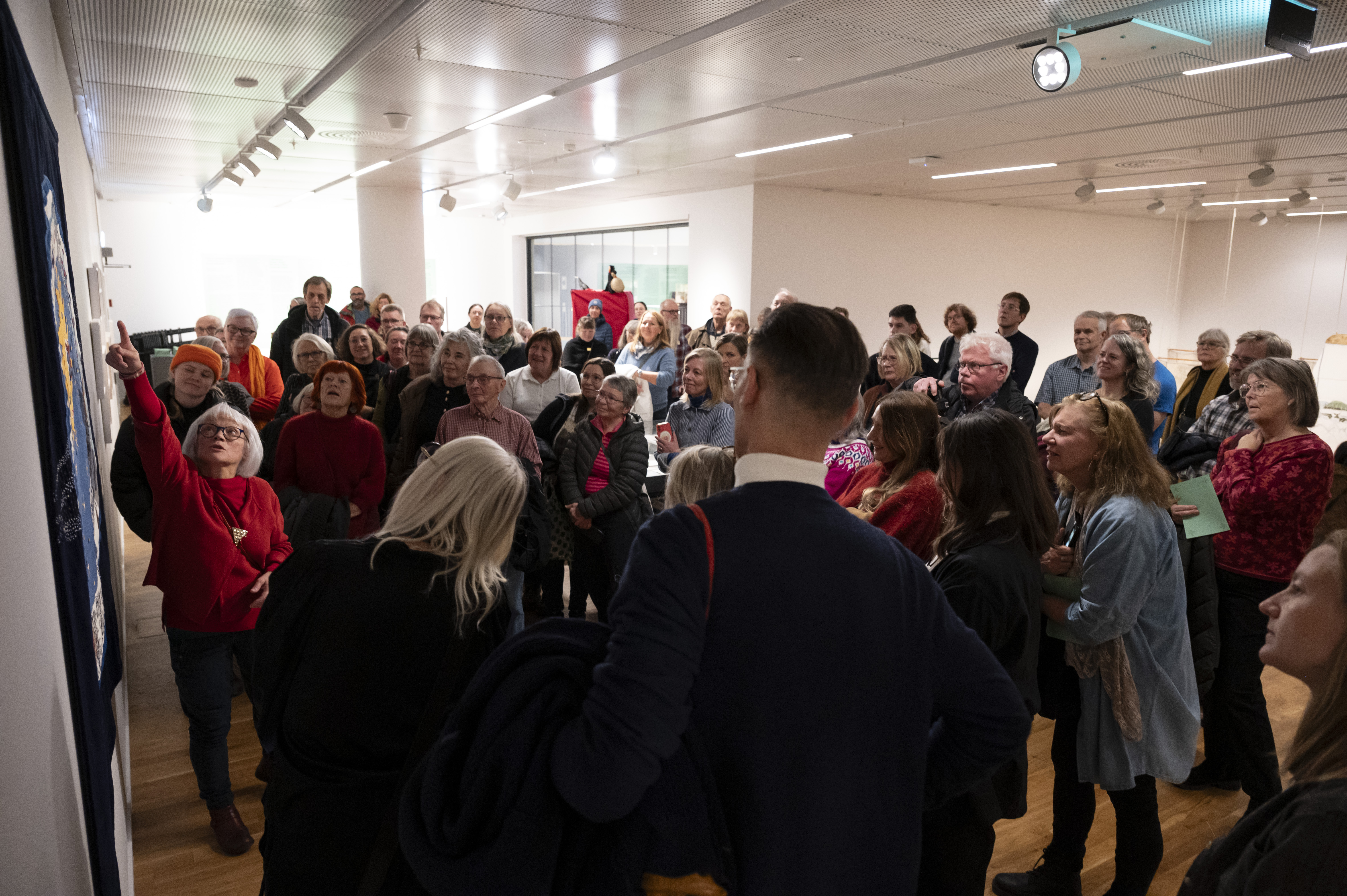
Image 2: Landscape, Photograph by Johan Ylitalo.